Saturday, December 10, 2011

Concept Worksheet 8 - Blacktop Vigilante

Short film - 10 min - for festivals, as basis for a feature film

Story Statement: A rogue vigilante in a one-of-a-kind car goes head to head with the driver of an oil tanker for an evil oil company.

Visual Style: Big, open expanse contrasted with the speed of two objects hurtling toward each other.

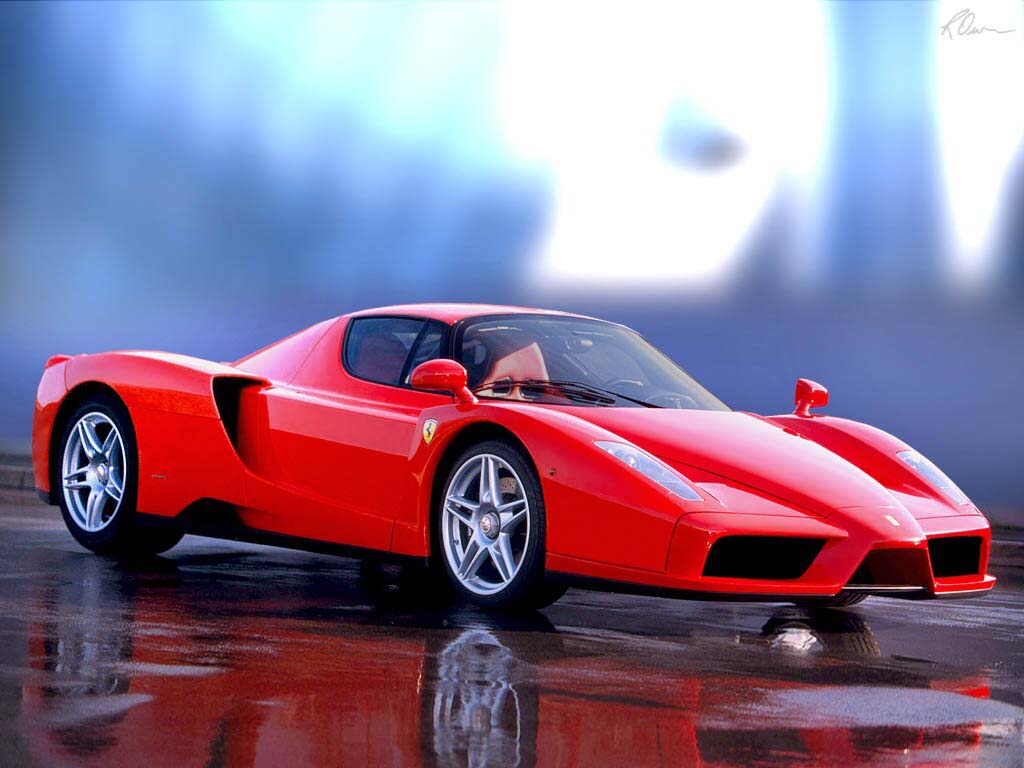
Plot: The desert is empty, desolate, save for the single dilapidated two-lane road that stretches across it. Dark clouds rise from an oil refinery off in the distance. A lone tanker truck heads away from the clouds, the words OIL CO. emblazoned on its side. The truck is heavily armored, some of it obviously just hastily welded-on scrap metal. The driver is eating a large sandwich and listening to ‘70s rock and roll. Suddenly, a voice comes in over the CB radio, but it is unintelligible. The driver turns off his music. “Can you repeat that?” He says. The voice comes in clearer now. “Drop your cargo and drive away,” it says.
            “Who is this?” asks the driver.
            “You know who this is,” says the voice.
            “You…” the driver says quietly. He nervously tightens his grip on the wheel.
            “Drop your cargo and drive away,” the voice says again.
            “You know damn well I can’t do that,” says the driver.
            “That gasoline isn’t making it to the border. It’s up to you whether you do.”
            “These new trucks are more heavily armored than most tanks,” the driver responds. “I’d like to see you try-“
            The voice cuts him off. “I see you’ve already made your choice.” 
The driver is visibly shaken. He scans the horizon. He sees something in the road ahead of him, off in the distance. He squints, then realizes what it is. It looks exactly like he’d heard from the few survivors. It looks like an extravagant Motorama show car from the 1950s, only covered in makeshift scrap metal armor. He can hear its engine, too. Not the roar of a normal combustion engine, but instead a strange, menacing hum. The car is barreling towards the tanker truck at great speed. The truck driver stares, astonished. He hesitates, then presses a red button on his dashboard. A metal plate with a small slit swings down in front of the windshield; large spikes come out of the front. The driver floors the gas pedal. The two vehicles hurtle towards each other. The tanker truck driver struggles to control his vehicle at such high speed. The Motorama car almost floats over the bumpy road. The two vehicles are just a few hundred meters apart. The tanker truck driver closes his eyes. The Motorama car driver pulls a lever; a panel under his car opens, and a group of spiked metal balls spill out onto the road. He then expertly maneuvers around the tanker truck, pulls his emergency brake, and skids to a stop. The tanker truck runs over the spiked balls, which explode, destroying the tires. The truck driver loses control. The truck jackknifes, flips on its side, and skids to a halt. The door flips open, and the broken, battered truck driver climbs out. A panel opens on the Motorama car, and a rocket shoots out. It hits the truck in its weak underbelly, igniting the gas inside. The truck driver jumps out of the way as the truck explodes. The Motorama car turns and drives off the road into the desert, leaving the truck driver alone.

Audience Connection: Should be an exciting, thrilling movie that connects with an important issue of out time.

Friday, December 9, 2011

Concept Worksheet 7 - Vengeance of the Geisha

Short - 30 minutes

Story Statement: A man is brought before a crime lord to be executed for failure to pay his debts, but he is saved at the last minute by an unlikely source.

Visual Style: Dark, saturated colors, and complicated camera movements

Plot: A man is brought before a crime lord in the crime lord's lavish, Asian themed apartment. He is accused of not paying off his debts, and the crime lord makes it clear that he is going to be killed. Before this happens, the crime lord asks for food to be brought to him. A young Asian girl dressed as a geisha brings out a plate of food, but she accidentally spills a drink on the crime lord. She is quickly removed from the room, but the man notices a peculiar look in her eye. Then he looks at the crime lord's plate of food, and notices what looks like a bomb hidden underneath it. The crime lord also notices this, and flings the plate of food at a wall just as the bomb goes off. In the ensuing chaos, most of the crime lord's guards take their opportunity and try to kill the crime lord. The man is able to grab a gun from a dead guard, but he is pinned down behind a pillar. Meanwhile, the crime lord is taking out each one of his guards. The man gets an opportunity to shoot the crime lord, but he looses his resolve and doesn't. However he is able to escape the room and the building.

As he runs out of the building, he notices the geisha girl also running away. Then he sees the crime lord burst out of the front door. The crime lord grabs the geisha girl and leads her away into the woods. The man follows them to a small creek. He aims his gun at the crime lord, but he is unable to pull the trigger. Just then, the crime lord pulls his own gun at the geisha girl. Without thinking, the man pulls the trigger and shoots the crime lord in the head. The geish girl notices him. They lock eyes.

Audience Connection: Everyone can relate to the desire for revenge, though the film is about how revenge is usually more complicated than we think. Also, the film should be suspenseful and thrilling.

Concept Worksheet 6 - The Church that Exploded

Short Film - 5 minutes - for the web

Story Statement: A young man finds a mysterious object in an abandoned church and learns an important lesson

Visual Style: Bright, unrealistic colors, and long, slow camera movements

Plot:   A young man was walking down a country road. His car was in the shop, so he had to walk to and from work every day. It was getting late, and he was very tired. He spotted a small church by the side of the road. It was very small, and obviously very old. Also, it was glowing. Curious, the young man ventured inside. Inside, the church was as small and old as it looked on the outside. The source of the glow was a ball of energy floating in the middle of the room. The young man approached the ball. Suddenly, the ball spoke. “Answer me this question, and I will grant you three wishes,” the ball said. “Uh, okay,” said the man. “Which is most important: money or power?” asked the ball. The man thought about it for a minute. “Neither. Love is what’s most important,” replied the man. “WRONG. SELF-DESTRUCT INITIATED,” said the ball, as it began to pulse and glow brighter. Frightened, the man ran out of the church. Just as he reached the outside, the church exploded into a giant fireball, and the glowing ball of energy shot into space, never to return. To this day, the ruins of the church remain, forever reminding the man what happens when you over-think the answers to questions.

Audience Connection: The story is a recognizable parody of the classic style of fables.

Sunday, December 4, 2011

The Kid from Beaver

Though his part in each film changes, most noticeably between the first and second, the filmmaker obviously sees himself as a character in the story. Even in the first film, where he is operating the camera, there is the little bit where he reads the letter from Don as he drives to the town. Clearly he sees himself as more than an impartial observer. In many ways, he is the reason the story happens. In the second two films, it is implied that the reason the show is put on at all is because Don thinks he is going to be on television. Throughout the second and third films you can see the filmmaker develop this idea, as he makes himself a literal character in the film. He has almost become an impartial observer this way. While the first film is filmed live, essentially bringing the filmmaker into the story, in the second two the actual filmmaker is unseen and his doppelganger is on camera, with a prop camera of his own.

As for Don himself, his "character" changes quite a bit throughout the three films. In the first film, he's not a character at all, he's an actual, strange person. The second film brings out his supposed sense of isolation from the community and his fear that people will not accept him, which is not very present in the first film. Don's character in the third film is very different from the first. The real Don seems like a normal, masculine guy, and you would never guess that he likes to dress up like Olivia Newton John unless he told you (which he probably would). Crispin Glover's Don, on the other hand, is very effeminate, and is definitely sort of the person who you would think would dress as a woman. I thought that this change, while not bad outright, did get rid of some of the more interesting parts of the original Don's character.

As for the secondary characters, the first and second films do not really have any. The only people we see Don interacting with are the filmmaker and the woman doing his makeup, and the woman barely says anything. We also see the other performers in the variety show, but they never drive the story forward or ever interact with Don. Their purpose seems to be to give us a feel for the other occupants of Beaver. In the third film, all these characters are fleshed out, and their interactions with Don are shown. This gives us a sense of Don's isolation from the community. The woman doing the makeup is obviously weirded out; the father of some of the performers voices his displeasure with Don's act; the host of the show is shown to be the school's principal. New characters are also introduced, such as Don's best friend and the other kids at the high school, who pick on Don. These characters all serve to show us how Don does not fit in with the rest of the town, and how he seeks to escape through his impersonations. This theme is not at all apparent in the first film, which is almost entirely nothing but Don. It is interesting that, though the story is told from Don's perspective in all the films, we learn the most about him through his interactions with other characters.

Observational Notebook - Snow!

Apparently they don't salt roads in New Mexico. I already knew this because I knew that classic cars from New Mexico are usually in better condition than in other areas, because salt makes cars rust faster. What I didn't know was that this also makes it really hard to drive here when it does snow.

Concept Worksheet 5 - The Treasure of Garbanzo Pass


Feature Film – 90 minutes – for festivals, the internet
Story Statement: Three friends find a treasure hidden in the desert, and their greed slowly tears them apart.
Visual Style: It would be shot like a classic western.
Story: While walking home from a party, three friends, Nathan, Sam, and John, are almost hit by a drunk driver. The driver, Rene, tells them about a hidden Confederate treasure. They decide to set out to find the treasure.
The next day, while shopping for supplies, each friend sees something expensive that want. They each realize that they would have to scam the others out of the treasure in order to afford it.
They all set out to find the treasure. It is exactly where the drunk man said. On the way back, Nathan slips away with the treasure. He runs to the road, where he hitchhikes. He is picked up by a car full of girls. They figure out that he has a box full of treasure, so they take it and kick him out of the car. Sam and John drive up behind him and pick him up. He apologizes and they set off after the treasure.
The girls take it to an all-girls school. They each sneak into the school their own way; Nathan sneaks around, John climbs the outside of the building, and Sam just asks a group of girls nicely where they went. They find the treasure and leave.
While walking away, Sam takes the treasure and jumps into the bed of a pickup truck. John and Nathan lose him, so they return to campus. There they meet Sarah, who mentions that her Grandmother is sick and needs an expensive surgery, but John and Nathan aren’t paying attention. They get a call from Sam, who asks that they come pick him up. They drive to where he tells them, and he comes running out of the woods only in his underwear. He refuses to talk about what happened.
As they drive through the desert, John’s car runs out of gas. Nathan mentions that the town is just on the other side of the desert, so John grabs the treasure and makes a run for it. They chase him across the desert. Eventually, John tires and gives up. As they get back to their car, Sarah comes to pick them up.
They drive to a pawn shop, whose owner explains to them that the treasure is actually worth millions. He also known’s someone who would buy the treasure for that amount, but they have to be at the pawn shop the next day at 5 exactly.
Unfortunately, on the way back to campus, they get run off the road by Rene. Rene is apparently part of a Mexican drug cartel, and they want the treasure. They are attacked by Rene’s gang, and they run into a canyon. As they get chased through the canyon, Sarah is captured and the gang members get the treasure, but the three guys escape in Rene’s car.
They discover that Rene’s trunk is full of guns, so they decide to take back the treasure. They raid the gang’s headquarters and find Sarah. Rene tries to escape with the treasure, but Sarah shoots him. Nathan, John, Sam, and Sarah have a classic Western standoff over the treasure, but when they fire they realize that their guns don’t have any bullets left.
Sarah remembers that they have to get back to the pawn shop before 5. They all frantically return to the pawn shop, getting there just in time. The buyer turns out to be a former western actor. He writes them a check and then walks off into the sunset.
Audience Appeal: Should be a fun and funny adventure. Also, everyone can relate to being a goofy college student.

Sunday, November 20, 2011

Observational Notebook - Old Family

I saw what was obviously a large family - there was a mom and dad and several kids - except that they all seemed to be elderly. Also none of the sons (they were all boys) seemed to be married. And they all had Beatles-style haircuts.

Concept Worksheet 4 - Midnight Coffee


Short Film – 20 minutes – for festivals
Story Statement: After driving for hours to visit his dying mother, Tim stops for a cup of coffee and finds himself trying to drive a pregnant woman to the hospital without passing out.
Visual Style: Dark, with a lot of fantasy sequences/hallucinations.
Story: An older, grizzled mountain man has been driving his Camaro across the desert for almost 20 hours straight. His mother is on her deathbed, and he is trying to get to her before she goes. It is late at night, and the strain is beginning to get to him. He starts having trouble staying awake, so he decides to pull into a fast-food place to get some coffee. He goes through the drive-thru line, but when he pulls up to the speaker something is wrong. He hears the sound of some sort of fight through the speaker. Suddenly a pregnant woman runs out of the restaurant, screaming. She runs down the road. Then several police cars pull up, and the police run into the building. He drives away, still very tired.

As he drives down the road, he sees the pregnant woman. He drives past her. He watches her in his rearview mirror. She suddenly clutches her stomach and collapses. The man stops his car, then reverses it to the pregnant woman. He opens the door, and asks if she needs any help. She is Hispanic, and does not speak much English, but he understands the words hospital and baby. He helps her in the backseat, and drives off.

Unfortunately for him and her, the hospital is across town. He struggles to stay awake as the woman screams and yells at him. He eventually begins to hallucinate, and almost falls asleep at the wheel. After almost crashing his car, he decides that he needs some coffee in order to make it to the hospital. Against the protests of the young woman, he pulls into a parking lot and runs into the coffee shop.

Inside the coffee shop the employees are all closing down the store. The man orders the strongest coffee they have, but the barista refuses to make it for him. They argue for a bit, and eventually the man pulls a gun on the barista. Under threats of death, the barista quickly makes a cup of coffee for the man. The man takes and chugs it in one gulp, throws away the cup, then pays the barista. Refreshed, he runs back into the car where the young woman is struggling with her baby. They drive off.

They make it to the hospital with seconds to spare. The woman goes into the emergency room, and the man collapses into a chair and falls asleep. When he wakes up, he learns his mother passed away, and that the young woman successfully had a healthy baby.
Audience Appeal: Will be both funny and thrilling. Everyone can relate to being really tired while also having to do something.

Fresh Eyes: The Power of an Audience

When coming up with an idea for a movie, and then making that movie, I think it is important to remember that I am not unique. There are many other people with life experiences that are very similar to mine, and therefore they probably have similar tastes as me. I make movies that I think I would like to watch. At the same time, one of the great things about film is that it is a collaborative medium, and movies rarely conform to only one person's viewpoints.

Friday, November 11, 2011

Instant Story - Midnight Coffee

An older, grizzled mountain man has been driving his Camaro across the desert for almost 20 hours straight. His mother is on her deathbed, and he is trying to get to her before she goes. It is late at night, and the strain is beginning to get to him. He starts having trouble staying awake, so he decides to pull into a fast-food place to get some coffee. He goes through the drive-thru line, but when he pulls up to the speaker something is wrong. He hears the sound of some sort of fight through the speaker. Suddenly a pregnant woman runs out of the restaurant, screaming. She runs down the road. Then several police cars pull up, and the police run into the building. He drives away, still very tired.

As he drives down the road, he sees the pregnant woman. He drives past her. He watches her in his rearview mirror. She suddenly clutches her stomach and collapses. The man stops his car, then reverses it to the pregnant woman. He opens the door, and asks if she needs any help. She is Hispanic, and does not speak much English, but he understands the words hospital and baby. He helps her in the backseat, and drives off.

Unfortunately for him and her, the hospital is across town. He struggles to stay awake as the woman screams and yells at him. He eventually begins to hallucinate, and almost falls asleep at the wheel. After almost crashing his car, he decides that he needs some coffee in order to make it to the hospital. Against the protests of the young woman, he pulls into a parking lot and runs into the coffee shop.

Inside the coffee shop the employees are all closing down the store. The man orders the strongest coffee they have, but the barista refuses to make it for him. They argue for a bit, and eventually the man pulls a gun on the barista. Under threats of death, the barista quickly makes a cup of coffee for the man. The man takes and chugs it in one gulp, throws away the cup, then pays the barista. Refreshed, he runs back into the car where the young woman is struggling with her baby. They drive off.


They make it to the hospital with seconds to spare. The woman goes into the emergency room, and the man collapses into a chair and falls asleep. When he wakes up, he learns his mother passed away, and that the young woman successfully had a healthy baby.

Observed Moments in Photographs - Geisha Vengeance


Observational Notebook - Two People Makin' Out

We are at a party.
Everyone is sitting around talking, drinking.
Except for two people.
Two people, a guy and a girl, are dancing in the corner.
What they are doing can only be called dirty dancing.
(No one else is dancing, by the way)
It's really awkward,
but most are too drunk to notice.

Concept Worksheet 3 - Geisha Vengeance


Feature-Length: 60-90 minutes
Story Statement: A young woman attempts to kill a gang leader responsible for the death of her lover. It does not go as planned.
Visual Look: High contrast, dark saturated colors; complicated camera movements
Narrative Outline: We begin the film in a lavish room in a large and heavily guarded complex. A gang leader is sitting at a table, surrounded by guards. A man is kneeling before him, a gun to his head. He is about to be executed for failure to pay back debts. As he pleads for his life, the gang leader orders his dinner be brought to him. A young girl dressed in a geisha outfit brings out a large platter of food. As she sets it down, though, she accidentally spills the leader's drink. He slaps her, and one of his guards takes her out of the room.

The guard leads her through the hallways of the complex. Suddenly, when they are out of site, she pulls out a knife she had swiped earlier from the tray, and she slashes the guards throat. Then she pulls out a small device hidden inside her dress. She activates it.

Back in the lavish room, the gang boss begins to dig into his chicken. He realizes that there is a bomb inside the chicken.

The girl runs through the halls. An explosion rocks the building. Gunfire can be heard erupting from the room. The girl manages to avoid the guards as they all run towards the central room. She escapes out a back door. The gunfire stops. She is almost away, when the main doors to the complex fly open. The gang leader is standing there, disfigured, covered in blood, but still standing. He chases her down and grabs her, leading her off into the woods.

They walk through the woods. The gang leader explains that just before the bomb went off, he was able to dive behind a wall, saving him from most of the blast. However, in the ensuing confusion, all of his guards turned on him, and tried to kill him. His only loyal guards were killed in the gunfight, but he was able to escape. He apologizes for hitting her, and laughs as he says that she is the only person he can trust, because she is the only person in the organization that he hasn't wronged in a meaningful way.

They stop at a creek so he can wash the blood off his face. He sets his gun down next to him. The girl tries to take the gun, but the gang leader picks it up again before she can. As he turns around to look at her, he realizes that her makeup has been started to come off because of all the sweat from her running. We now see that there is a large scar across her cheek.

Flashback to several years before. The gang leader is torturing a young boy who had wronged him. The girl is hiding in a closet, watching. The leader kills the boy, then notices the girl. He tries to kill her too, but she is able to escape. However, the leader cuts a large gash into her cheek.

Present day: the girl realizes that her scar is showing. The gang leader puts it all together in his mind. He points the gun at the girl's head. There is a loud bang, and a hole appears in the gang leader's head. He slumps to the ground. Behind him is standing the man who was going to be executed, holding a smoking gun.
Audience Connection: Everyone can relate to the desire for revenge, though the film is about how revenge is usually more complicated than we think. Also, the film should be suspenseful and thrilling.

Concept Worksheet 2 - Danger in the Air


Short live-action film for festivals/web, to be used as basis for feature
20 minutes
Visual Look: Claustrophobic, dark, interspersed with sprawling beautiful wide aerial shots.
Story Statement: A pilot for a skydiving service realizes his passengers are terrorists planning on dropping a weapon on a large city, and he is the only one who can stop them. Die Hard on a plane.
Narrative Outline: Tim, a former navy pilot, is hired by a group of seemingly wealthy thrill-seekers to fly them over LA so that they can skydive into the city center. Tim needs the money, so he agrees to do it. The group acts odd though, and Tim suspects that something is up. After he has taken off, he gets a call over the radio. It is the FBI, and they suspect that the group is made up of terrorists planning on dropping a bomb into LA. They tell Tim to try to land at a nearby airstrip. Tim attempts to change course without the terrorists noticing. They catch on, and threaten him with death if he does not return to the original course. He is able to use his navy training to subdue all but one of them. The final terrorist reveals that they were not going to drop an actual bomb on the city; instead, they were going to infect themselves with a deadly and highly contagious virus and drop themselves into the city. Then he sticks a syringe into his arm and falls out of the plane into a small town below.
Audience Connection: If done right, it should be a thrilling, suspenseful 20 minutes. Also, most people can relate with having an important task that must be done quickly, and having no idea how to do that task.

Friday, November 4, 2011

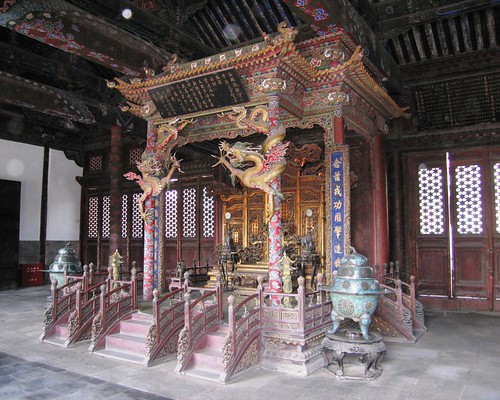
Moments in Photographs: Geisha Vengeance

We begin the film in a lavish room in a large and heavily guarded complex. A gang leader is sitting at a table, surrounded by guards. A man is kneeling before him, a gun to his head. He is about to be executed for failure to pay back debts. As he pleads for his life, the gang leader orders his dinner be brought to him. A young girl dressed in a geisha outfit brings out a large platter of food. As she sets it down, though, she accidentally spills the leader's drink. He slaps her, and one of his guards takes her out of the room.

The guard leads her through the hallways of the complex. Suddenly, when they are out of site, she pulls out a knife she had swiped earlier from the tray, and she slashes the guards throat. Then she pulls out a small device hidden inside her dress. She activates it.

Back in the lavish room, the gang boss begins to dig into his chicken. He realizes that there is a bomb inside the chicken.

The girl runs through the halls. An explosion rocks the building. Gunfire can be heard erupting from the room. The girl manages to avoid the guards as they all run towards the central room. She escapes out a back door. The gunfire stops. She is almost away, when the main doors to the complex fly open. The gang leader is standing there, disfigured, covered in blood, but still standing. He chases her down and grabs her, leading her off into the woods.

They walk through the woods. The gang leader explains that just before the bomb went off, he was able to dive behind a wall, saving him from most of the blast. However, in the ensuing confusion, all of his guards turned on him, and tried to kill him. His only loyal guards were killed in the gunfight, but he was able to escape. He apologizes for hitting her, and laughs as he says that she is the only person he can trust, because she is the only person in the organization that he hasn't wronged in a meaningful way.

They stop at a creek so he can wash the blood off his face. He sets his gun down next to him. The girl tries to take the gun, but the gang leader picks it up again before she can. As he turns around to look at her, he realizes that her makeup has been started to come off because of all the sweat from her running. We now see that there is a large scar across her cheek.

Flashback to several years before. The gang leader is torturing a young boy who had wronged him. The girl is hiding in a closet, watching. The leader kills the boy, then notices the girl. He tries to kill her too, but she is able to escape. However, the leader cuts a large gash into her cheek.

Present day: the girl realizes that her scar is showing. The gang leader puts it all together in his mind. He points the gun at the girl's head. There is a loud bang, and a hole appears in the gang leader's head. He slumps to the ground. Behind him is standing the man who was going to be executed, holding a smoking gun.

Observational Notebook: One of Those Smells

As I walked out of my apartment complex, it hit me: one of those terrible lingering smells that seem to come from nowhere. As long as I stood in that one spot, I could smell it. It was not pleasant, and reminded me of of moldy carpet crossed with something horrible and indescribable. I was reminded of New York, where similarly interesting and horrible smells hit you in the face all the time. And I mean "hit you in the face" literally. They don't drift past you, like a pleasant ocean breeze or the smell of a tasty cake; they actually run into you, forcing you to stumble and regain your balance.

Responding to Creative Differences

The hardest part of collaboration isn't usually being the director fighting for his creative vision, it's being on the opposite side: the guy who is trying to convince the director that he should be doing something differently. This is tricky, because it is often hard to tell the difference between your own creative vision and an idea that will help the director. Ideally, you want what is best for the movie.

Thursday, October 27, 2011

Observational Journal - The Man More Badass Than Me


I was in the thrift store the other day, looking for props for a movie. I noticed these awesomely badass black leather trenchcoats, which were also really cheap. One had a cowboy-style pattern on the back, and another was made out of fake alligator skin. I seriously considered buying one, but I hesitated, because I was worried that I would look like a serial killer (one of the less-unfortunate effects of the Columbine shootings is that you can't wear black trenchcoats in public anymore). However, they were still really cool, so I decided to look around some more and come back to them. So I came back, but this time there was someone else checking out the jackets. He was a legitimate Mountain Man, with a long beard and weathered skin, and he was already wearing a leather jacket with cowboy boots and totally not looking ridiculous. If I had to guess, I'd say he was at least one million years old, and he probably could have killed me with a well-placed stare. I sheepishly looked at some less-badass jackets, then I decided that if anyone should be buying those trenchcoats, it should be that guy. And I am $20 richer today because of that decision.

A Life Unguarded: Concept Worksheet 1


Short, live-action film for web/festivals
20 minutes
Visual Look: Bright, saturated colors that enhance the bright colors of a swimming pool. Deep blues, bright reds, dark greens, and blinding whites all convey the sunny, hot world of a pool. The camera movement would be slow and smooth, to emphasis the tedium of being a lifeguard.
Story Statement: An extra lifeguard is brought in to work at a pool. He hates his job, and works very hard at not working at all. He also ropes in the original lifeguard to being lazy. Eventually, he is fired by the pool manager.
Narrative Outline: Tim works at his local pool as a lifeguard. He has few ambitions, and just uses the job as a way to kill time between semesters of college. The pool manager decides to hire an extra lifeguard, and she hires Matt. Matt hates being a lifeguard, but he needs the money. At first Matt thinks he can get away with being lazy; he sleeps on the job, takes long breaks, etc. However, he never gets caught, because he always looks like he is working when the pool manager shows up. Matt teaches Tim his strategies of lazyness, and at first, Tim rejects them. Eventually, however, the boredom of the job starts to get to Tim, and he gives in. In response to complaints by customers, the pool manager begins implementing stricter rules. Matt blatantly refuses to follow the rules, and eventually the pool manager sees him doing this and confronts him. Matt explains loudly and in great detail how much he hates the job, and how they keep taking away everything that makes the job tolerable. Matt is fired and replaced, and Tim continues to work at the pool, following the new rules.
Most of the movie would be little events, such as Matt asking a lap swimmer to leave the pool and her refusing, or Matt making fun of the swimmers to Tim, which don’t advance the story so much as they convey what it is like to be a lifeguard. It also would incorporate several fantasy sequences as Matt and Tim daydream while they're staring at the water.
Why an Audience Can Share in This: Every one can relate to having a sucky job that they hate and finding ways to deal with the suckiness.

Arguments Worth Having


The most important thing you need to have in a coolaboration is trust. You have to trust your actors to do what they need to do, the actors need to trust the directors decisions, the director needs to trust that the cinematographer knows what he or she is doing, etc. This is especially difficult on super-low-budget films, because most of the time the people working for you are not being paid. This means you have to rely on them to show up on time and do the work with no incentive other than professionalism and a desire to work. A lot of the time this means that I end up doing a lot of the dirty work myself, because I don't want to ask someone else to do it for me for free.

Moral of the story: having money is nice.

Friday, October 21, 2011

Observational Journal: I Need to Stop Eating Dinner So Early


The other day I had one of the most vivid dreams I have ever had, and it was odd because it wasn't vivid in terms of image or sound. It was vivid in terms of taste. All I remember about the dream was that I was eating chocolate ice cream, and it was the most delicious chocolate ice cream I have ever tasted. It was more smooth and creamy than words can describe, and there were chunks of chocolate within the chocolate, giving it an amazing texture. It literally melted in my mouth, and I felt full for a few minutes after I woke up (after that I felt extremely hungry). It was like my brain imagined the most chocolatiest thing it could imagine and made it real for a few seconds.

Stop, Children, What's that Sound


This soundscape idea is for my lifeguard movie. Pools have an array of sounds associated with them that I would use to open the movie, and to put the audience in the location. There are the sounds of water splashing and being sucked into the filters; the rythmic sounds of lap swimmers swimming back and forth; the sounds of children playing, and jumping into the pool; the occasional lifeguard whistle; the patron's conversations; and the wind as it blows through the trees. The soundscape would end with the most beautiful sound a lifeguard can hear: the sound of thunder off in the distance. This means that the lifeguards get an extra break, and it would transition the film from the black screen to the opening shot of the movie.

A STONE down by the RIVER.

This color scheme was inspired by trombones.


In middle school, I was in the school band and I played the trombone. During band class me and the other trombones would usually goof off and make snarky comments to each other (our section was in the back and in the corner, so it was pretty easy to get away with). We would also discuss episodes of the Simpsons quite a bit, because we were all fans and we all liked making each other laugh. In a way, we all bonded over our shared love of pop culture and goofing off. I don't think any of that could be turned into a movie, or even a short film, but I do think it could serve as inspiration for a group of characters or a scene within a movie.

Sunday, October 16, 2011

"My Nature-Place, Part Deux"


They most obvious difference I noticed was the temperature. It was not cold, but it was cooler, with a cool gentle breeze blowing through the plant life. I could almost feel the freezing cold of winter coming, even though it was not here yet. The breeze made everything seem much more serene, which was a little ironic because I could here someone blaring death metal off in the distance. The plants had begun to feel fall's effects; the trees above me had turned a dark purple, and many of the plants were slightly browner than I remembered. Of course, this also could be because of the end of the rainy season, and I suspect that many of these plants are not native to the desert. The sun has definitely moved, because where there was once shade there was now sunlight, which was nice, seeing as it was significantly less hot. My thought was for the fish in the pond, and what will happen to them once it freezes over in the winter.

Dream Film: A Life Unguarded


Dan is a lifeguard at a local pool. He is not exactly the ambitious type, does not really have any aspirations. One day, his boss decides that the pool needs two lifeguards, so she hires Mike. Mike was a lifeguard a while ago, and has since fallen on hard times and needs the money. Mike also hates lifeguarding, while Dan is mostly ambivalent. Mike spends his days trying to do the least amount of work possible, and he usually brings Dan into his schemes. Their boss, Amber, constantly lays down new and ridiculous rules, but she is too naive and unassertive to actually enforce them. Eventually, Mike is fired/quits, and goes on to bigger and better things, while Dan continues to work at the pool.

Observational Notebook: The Man in the Old Camaro


The man is grizzled in every meaning of the word. He has grizzled white hair, his face is tan, wrinkly, and grizzled, and his dusty leather jacket is grizzled. He looks like he has been lying in the desert for 20 years, which probably is not far from the truth. The car is similar to the man. It is a late '60s Camaro, and it also looks like it has spent far too much time in the desert. It is dusty and rusted around the edges, it is still going strong and looks twice as badass because of it. In the passenger seat sits a young woman of Mexican heritage. She is not grizzled at all. How did they meet? Is she his girlfriend, his wife? I would guess that she would be his friend, except I don't think this man is capable of non-traditional male-female friendships. Eventually, I think, this man will probably be responsible for saving the world. And we won't even have to thank him for it.

Enticing Inuition


My strategy for balancing the work aspect of creating with the non-work aspects of creating is to just not worry about it. I do my work when I need to or when I want to, and all other times I do other things that I enjoy. As long as I am doing things that I enjoy, I will be creative, because being creative is something that I enjoy. I do agree that having a deadline really helps the creative process, because without a deadline there is a tendency to put off things indefinitely. However, the most important thing to remember is that writing, directing, etc. are not chores; they are all things that I really like doing. I find it much easier to get into the creative mindset when I remember this. When being creative becomes a chore, it is time to find something else to do.

Saturday, October 8, 2011

Observational Notebook - Revealing Actions


I am watching a movie with a group of people. One of these people, who I will refer to as Jim, does not care for another one of these people, who I will refer to as Jebediah. Throughout the movie, whenever Jebediah makes a comment, Jim becomes noticeably silent and tense. Whenever Jebediah asks a question, Jim's answer is almost always a stern "no." After the movie, Jebediah suggests that we want to watch another movie, and Jim quickly turns him down. In fact, throughout the night, Jim is made noticeably uncomfortable by Jebediah being there.

Dream Journal


I am working as a lifeguard at a dinosaur-themed water park. I don't remember actually seeing any dinosaurs, I just remember knowing that the park was dinosaur-themed. I do remember that everything had sort of a Jurassic Park look to it. It is very crowded, and I am walking with another lifeguard alongside one of the pools. He we run into our boss, who asks us what we are doing. The other lifeguard successfully convinces her that we are doing our jobs, and she walks away. The other lifeguard then explains to me his method of convincing our boss that we are working when we are just wandering around the park.

Thursday, October 6, 2011

10 Things Excercise, For Serious This Time


1963 Pontiac Grand Prix


I am lying underneath the car, loosening a bolt on somewhere on the undercarriage. The car is lifted up on jacks, and its wheels are missing. I loosen the bolt for what seems like an hour, but it doesn't seem to be any looser. My arms get tired, and I have to put them down and let them rest. A cool breeze blows under the car. It is a mid fall Saturday afternoon, and I am 17. Because the hood is open, I can see past the engine block and various mechanical parts through to the sky above. I can also see the top of the magnolia tree that sits next to our drive way as it sways in the wind. I look to my left. I get a close up view of the nut and bolt I unscrewed before this one. I see an ant, and I consider squishing it. My dad is at the back of the car, fixing something himself. I look at the bolt again. It is way too rusty to pull off with this wrench. Once again, some seemingly small job on this car has turned out to be way bigger than we thought.

Folk Art Festival

I am standing on a dirt road at some park somewhere in Georgia. White tents line each side of this road, filled with stupid, boring art. I am around 8 years old, and I would rather be anywhere but here. My parents are looking in one of the white tents, examining each poorly made piece of art individually. My dad remarks that one of the objects is cool, and my mom agrees. It doesn't look that interesting to me; in fact, everything at this stupid festival looks the same. There is a tent filled with figures and objects made of scrap metal behind me. Next to it is a tent full of paintings that I could probably have made myself. Above my head are the tops of the giant trees filling this park, providing well needed shade. It is summer, and it is hot. In my hand is a half-full slushy drink. All the delicious flavored water is gone, and all that is left is the ice. I eat the ice anyway because I am really thirsty. My feet are tired and I am bored. My parents finish looking at the art in the tent. If I'm lucky, we'll leave soon; at the very least, we should pass one of those tents filled with wooden handmade toys.

Lifeguarding

I am sitting in the lifeguard stand, in an uncomfortable plastic chair. Above me is an umbrella, providing the bare minimum of shade. The sun is in front of me, so the umbrella only gives shade to the top half of my body. It is the middle of summer in Georgia, and it is hot. A cool breeze blows by, giving me brief break from the heat. In front of me is the crystal blue swimming pool. A group of moms float and talk while they're kids struggle to barely keep their heads above water. One kid jumps off the side. Another group of kids have built of fort out of kickboards. I'd ask them to put the kickboards back so that other swimmers can use them, but I honestly don't care. To my left are the lap lanes, and the lap swimmers. They swim back and forth slowly, like they do every hour of every day that the pool is open, no matter the weather. Off in the distance a giant storm cloud taunts me with its lack of thunder. If it would only thunder once, I would get an extra break, and all the swimmers would have to leave. I look to my right, and see a giant group of kids approaching the pool. Great. Now the pool will be twice as crowded. I silently curse the sky.

The Creek Behind My Elementary School

I am standing in the middle of the creek, on a sunny Spring afternoon. There is a sandbar that goes most of the way across the creek. On my left is the main stream, and on my right are several smaller streams. On the embankment on my left is the bamboo forest, and directly opposite that is the playground. Above me is the canopy of the trees, providing more than adequate shade. The creek runs in the direction I am facing, and it is filled with broken chunks of concrete and fallen trees. Somewhere is a tire filled with concrete, with a metal pole stuck in the middle, which was no doubt one half of a volleyball net at some point. My friends are next to me, building structures in the sand. We are attempting to force the stream to go where we want it to go by placing rocks, sand, and mud in its path. We build makeshift dams and structures. If we are lucky, they may still be there tomorrow. There is a tree across this part of the stream, providing a natural bridge. Along one side of the creek are the rusty remains of a fence that undoubtedly prevented kids like us from doing what we are currently doing.

Wednesday, October 5, 2011

Daydreaming


Just having an object in my hand can set of a daydreaming session. It does not even have to be a toy; any object that is small enough to be held in one hand, solid, and not too light or heavy will work. Pens and pencils work best, though this may be because they are usually what I have when I daydream the most (i.e. in school). I think the object serves as a sort of starting point for my imagination. It helps if the object isn't already a thing, like a toy car, because that results in free form daydreams, as opposed to daydreams centered around the object. I will admit that this results in a lot of space-related daydreams, because just about everything looks like a spaceship if you really think about it.

I tried daydreaming after reading the text. What I got was a sort of crazy music video, probably because I was listening to music at the time.

The Dreamer


In class, we talk a lot about getting out of our heads, because there's nothing original in there. It is funny, then, when the artists in the book talk about being inspired by or finding meaning in their dreams, because my dreams are even worse at being original than I am. My dreams tend to be odd collections of pop culture and actual people and places from my life. One of the most fun dreams I ever had was about me, as Neo from The Matrix, fighting Doctor Octopus, the Spiderman villain, on the yellow brick road. After I saw the movie Inception, I had more than a few Inception-like dreams. I think that dreams are just collections of ideas and images floating around in our head, which are arranged in strange and unusual ways when we sleep by our subconscious.  We do this consciously when we are awake, but we call it imagination.

Evocative Object

A Penny's Story

I am a penny. I was forged out of zinc and copper 34 years ago. I have seen this country grow and change perhaps more than any other human alive. I have traveled from the Atlantic to the Pacific, from New York to Los Angeles, and one time I briefly crossed over into Mexico. I have spent time in the pockets of some very influential people (or so I assume, judging by the amount of $100 bills in their pocket. Those guys are so stuck up.) I have fallen out of more pockets than I can remember, and I have spent time in the streets of some of the greatest cities of this country, as well as some of the smallest. You see things when you are lying in the street for so long. All manner of people pass you by. Sometimes, they'll look at you, bend over as if to pick you up, then change their minds at the last second. One time, I fell out of a car on a country road, next to some gorgeous mountains. The views were quite beautiful, but I was certain that I would be stuck there for the rest of my existence, slowly rusting until I was one with the Earth again. After many days, however, I was found by a hiker. He seemed as surprised to see me as I was to see him. Eventually, he left me in the Take-a-Penny, Leave-a-Penny tray at a gas station. I met another penny there who claimed that he had been to China and back. I don't know what use they would have for an American penny over there. Then again, I did meet an Italian Eurodollar in some pocket in Florida. He seemed upset that he kept getting mistaken for an American quarter. Poor guy, he probably ended up on some collector's desk, unable to be spent. Another penny in that tray claimed to have been dropped off the top of the Empire State Building. I couldn't tell if he was telling the truth, but one of his sides was slightly flatter than the others. A penny hears quite a few stories out there on the road.


For my object, I chose to bring in a toy version of a Lamborghini Miura. Most of the items that I own that really mean something to me are at home, in Georgia, and the Miura was the best thing I could find that I had here. I got it on a family trip to Italy, at a little toy store in Rome. I remember wanting to buy a toy Italian sports car while I was there, and I found the Miura, which is one of the coolest looking cars ever made. In that way, the toy Miura is a reminder of that trip. In another way, it is a reminder of home. In my room at home, I have a huge collection of toy cars, collected throughout my childhood. Literally every flat surface is covered by toy cars of every shape and size. I brought the Miura with me when I came here to make my dorm room feel a bit more like my room at home.

Thursday, September 29, 2011

Doing the Homework and Open-Closedness


The first section reminded me of a scene from a student film a friend of mine made. In it, the main character gets a call during one scene. She answers the phone, and, in a throw-away line, mentions something about "spreadsheets" and "memos." This line always rang really false to me, and I think it was because the writer did not actually know anything about what this character's job actually was; he just threw in some businessy-sounding words and figured that would be enough. The line didn't sound real to me because the neither the writer or the director had bothered to research it. I think this happens very often in movies. Even if the audience is not an expert on the subject, they will still be able to tell  if a director has not done his homework.

The second section is really hard to write about, because what the author is trying to get is really hard to explain. I think what all the filmmakers are getting at is this "something-ness" (what I like to call it) that occurs when a really good idea is formed, and how to achieve this "something-ness." Unfortunately, way to find this form of inspiration is completely different for every person, and there's not really a good English word that describes it. The Germans probably have a word for it.

Visual Clustering: And Nobody Knew What Happened That Night


Originally the story started with "one weekend in 1941," but we got rid of that once we realized that almost every other group had chosen the same beginning. Our story starts with two people, a man and a woman - let's call them Jeremiah and Bermuda. These two people, two lovers, attend a fancy party at an art gallery in New York. This art gallery is having a special exhibition on some rare jewels, which the couple steals. They escape on a motorcycle (which they had planted the night before) and ride across the country to evade the police. To help hide their tracks, they don't stay in any hotels; instead they camp outside, under train bridges and in chicken coops. Eventually, they reach their destination: the Pacific coast. They take a boat out to an island with an abandoned lighthouse, where they bury the treasure. They then steal an old biplane and fly across the Mexican border, where they hide out in a small Mexican village. This is almost a second honeymoon to them, and they spend their days and nights living life to the fullest. However, Jeremiah accidentally pisses off a Mexican drug lord, and they are forced to return to the States. They have no money at this point, so they return to the abandoned lighthouse to retrieve the jewels. Unfortunately, the Mexican drug lord tipped off the police, who are waiting for them at the lighthouse. The head police officer, who always has a cigarette and wears big, dark glasses, tells them that they will receive leniency if they come quietly. This, however, is not in their nature, and they both are killed in the ensuing firefight.

Saturday, September 24, 2011

Location, Location, Location


The courtyard in the Art Department building on campus is a strange place, like some sort of surrealist painting. The walls of the courtyard, like the rest of the building, are a deep, dark red, which contrasts with the blue New Mexico sky. The ground is made up of white pebbles, a much wiser choice than the green grass seen elsewhere on campus, considering we are in a desert. There is a tree growing in one corner, which looks odd growing out of the white pebbles. Probably the thing that makes it most interesting is the square room in the middle, with the same red walls as the sides. This makes the courtyard into an odd shape, more like a set of triangles than the normal square. This also means that anywhere you look, the building seems to be made up of solid geometric shapes, with bits of nature poking out. It would be impossible to take a picture here and not have it look like a piece of modern art.

Friday, September 23, 2011

Get Into My Dreams Get Out of My Car


My first thought on the readings was that I should take a walk somewhere, and experience this stuff that the writers were talking about. Of course, then I remembered that I had more homework to do, so I probably would not be able to do that.

Honestly, I think I sort of do what they are talking about already. When I am writing a character, it's helpful to base that character on someone I know, and to imagine what they would do in certain situations. However, this does mean that I might have trouble writing about an impoverished Mexican immigrant family, especially compared to writing about a white American high school student. I would say that the stories of impoverished Mexican immigrants should be told by people who know that world; I will tell the stories about the world I know.

Raw Material into Story: Mystery of the Hava Java


A small hut in the middle of a parking lot which sells coffee. Unbeknownst to its customers, it conceals an ancient spring, from which pours the most delicious coffee known to man. This coffee is so delicious that it can grant the drinker his deepest, darkest desires. The keeper of this coffee hut is an old man, who has taken it upon himself to protect the spring from the modern world. He dilutes the coffee with tap water, so it no longer grants wishes, it only tastes very good. Though he has been kept alive much longer than normal by the aroma of the coffee, his strength is fading, so he hires a young man to help him. The young man discovers the secret and drinks the coffee, only to have his darkest desires destroy his life. The old man explains the he once drank the coffee many years ago, which is how he is aware of its terrible power. The old man drinks the coffee again, which undoes the young man's wish, but also seals the spring forever and ends the old man's life.

Some Lists


Top Ten Cars from my childhood

1. 1963 Pontiac Grand Prix
2. Bright yellow Scion xB
3. Izuzu Trooper
4. Honda CRV
5. Volkswagen Rabbit
6. Volkswagen Passat
7. Grandfather's old Mazda van
8. Lamborghini Murcielago
9. Other grandfather's Mercedes SUV
10. blue Renault hatchback

Top Ten places I really liked to visit in my earlier days

1. Toy store
2. Disneyworld
3. Europe
4. New York
5. Southwestern US
6. California
7. Dairy Queen
8. Comic book store
9. Magazine section of book store
10. Creek behind my school

Top Ten places I disliked going in my earlier days

1. Art Museums
2. Folk Art Festivals
3. Aunt and Uncle's house
4. the doctor
5. the dentist
6. school
7. upstairs, at night, when the lights were off
8. high school soccer practice
9. morning marching band practice
10. Clothing Stores

Top Ten things that make me angry

1. Loud stupid people
2. Stubbing my toe
3. Bumping my head
4. The music of Ke$ha
5. Busywork
6. working as a lifeguard
7. The Tea Party
8. mosquitos
9. unfairness towards me
10. Transformers: Revenge of the Fallen

Limberin' Up


I have always found history to be interesting. Not the "this is how people lived back then" part of history, but history as a series of events, each event causing the next event, until eventually we end up where we are today. It's interesting to understand famous events as they really are thought to happen, not as popular culture tells us they happened.

I know the zombie genre is sort of played out by now, but I think it would be really interesting to make a zombie film set during the Vietnam War. The US government accidentally releases a zombie virus into Vietnam, which winds up decimating the country as well as the American soldiers stationed there. The zombies could be a big (if a bit heavy-handed) metaphor for the war itself - friends turning into murderous monsters, an enemy that is perceived as less than human, the destruction of Vietnam for ill-defined reasons. The movie would follow a platoon of soldiers who are sent to discover the fate of a military base, and who then find themselves in the middle of a zombie epidemic which they try to understand and escape. A sequel could be set in early 1970s Washington DC, where another outbreak has broken out, and it could examine the Watergate scandal and the "war at home."

Saturday, September 17, 2011

Observational Notebook: Am I Funny to You?


I met the man known as "Cliff" when he auditioned for my directing class. The casting call was for a 25-35 year old male, a description Cliff very much did not fit. He was an old New Yorker type, with thinning gray hair and giant old-man sunglasses. His personality was Woody Allen crossed with Martin Scorcese; he looked a bit like a very old Joe Pesci. He spoke with the authoritative air of someone who realizes that he has seen far more than anyone else in the room. He acted like an old pro: a bit hammy at times, but always entertaining, and game for anything we suggested. All the other actors lingered a bit after they were finished, before we told them they were done. Not Cliff. As soon as he was finished, he left. He had obviously done this many times before.

Friday, September 16, 2011

Family Story: Dead Man's Chest


Family Story: The Curse of the Black Pearl


When my dad was a kid, he lived in Sierra Leone for a year. My grandfather was a college professor, and he had gotten an offer to teach at a school there, so the whole family moved to Africa. Because his family was white and (relative to the native Africans) wealthy, they lived on top of a hill, with the other white families, while the native Africans lived at the bottom of the hill. That Christmas, my grandfather took the family to see Santa. Now this wasn't America, and there weren't any shopping malls, so they went to the local grocery store, which had a Santa that people (probably mostly white people) could visit. Outside of the store were dirt-poor Africans, begging to the white patrons. Inside the store was Santa Claus. This Santa was not an elderly white man with an appropriate beard; instead it was a black man, in a Santa costume, wearing a plastic Santa mask. They went through the ritual. The kids all sat on his lap, told him what they wanted for Christmas, and left.

The most important thematic part of this story is the incredible disparity between the rich whites and the poor natives. There is, of course, the visual of the white's houses, which are physically above the black neighborhoods, and would be much nicer. My dad's family would be dressed nice, but not fancy, while the begging Africans would be dressed in dirty, ragged clothing. Finally, there would be the indelible image of a young white child asking an older black man for something the black man would probably never be able to afford.

Diez Autos


I didn't do the "10 Cars" exercise exactly as intended; instead of coming up with an image I came up with a series of images, or, more accurately, a movie. The movie largely consisted of the car I chose, a 1959 Cadillac Eldorado, driving through a city being chased by helicopters. Once I realized what Barry was asking for, I decided to focus on the final image of the chase sequence. For the blog, however, I think I'll back up the sequence a few seconds, to the get the image I think I would have originally chosen.

I am standing next to a river, facing the opposite side. The Cadillac is suspended over the river, frozen in time. Its wheels spin slowly, in slow motion. It is slowly hurtling towards me, but I am at a safe distance. Its metallic paint, chipped by bullet holes, reflects the surrounding area. I am standing in the middle of a large, nondescript city. Long avenues and tall buildings stretch out into the distance. It is mid-afternoon. Behind the Cadillac, a gigantic fireball has erupted, as the building the Cadillac has just smashed through has exploded. Orange and yellow flames expand out in all direction, as do various bits of glass and concreted. A helicopter flies overhead, its spotlight reflecting off the Cadillac's shiny paint. In the driver's seat is an unidentified man in a leather jacket. One hand grips the steering wheel, while the other waves a cowboy hat in the air.

Friday, September 9, 2011

Roots Rediscovered


I'm bothered by the assumption that I'm a stodgy old adult who's forgotten how to play. I don't think I ever really stopped playing, though admittedly I do it much less often. Playing for me is really a form of stress relief, and also a bit of procrastination. I actually happen to have two toy cars on my desk, which I brought with me as a little reminder of home (my room at home is covered in toy cars. Literally every surface has toy cars on it. Many of them aren't even that old). I'll play with my toys anyway, usually when I have something else important to do.

It was actually more difficult for me to play for this assignment, because I wasn't doing it because I wanted to, I was doing it because I had to. This made me a bit more self-conscious than usual, especially since I had to analyze and think about what I was doing. Eventually I settled into the familiar groove, though, and I played with my toys. Sometimes, if I come up with an interesting scenario, I'll write it down as a movie idea. Unfortunately, most of these ideas would require enormous budgets and advanced stunts and special effects, but they're still fun to think about.

Criminal Conversation


I was riding the bus downtown, and this guy standing behind me started a conversation with some other people on the bus he knew. I don't remember exactly what he said, but apparently two days before, he was walking home from work when he was arrested. He had forgotten to pay all of some fine, and he was put in jail for the day because of it. He missed a day of work, and he was unable to call in and tell them what happened. He seemed to have just been released, and he seemed worried that he wouldn't have a job to go back to the next day.

I don't know what crime he originally committed, but it couldn't have been that terrible if the punishment was only a fine. Now, because of a small mistake, he was in danger of losing his job, which I imagine is fairly important to him. The whole situation sounded, for lack of a better word, sucky.

It actually reminded me of a similar situation I'm currently in. I got a traffic ticket for a fairly small traffic infraction, and I thought I paid the ticket, but because my city's website was stupid apparently I didn't. Now I have to pay another fine on top of the original ticket. It sucks a lot, because the original infraction was so insignificant. Of course, I'm not losing my one source of income, and my parents will probably help me pay for it. I was fairly pissed off about this until I heard this guy's story, which put it into perspective. No matter how bad you have it, someone else has it worse.

Monday, September 5, 2011

Rhymes With Blornge


My main thought during the Orange Exercise was "I really want to eat this orange." The tastiest part of the orange is the juice; every other part pales in comparison. Eating the orange slowly made me realize this. When I eat the orange quickly, I get maximum deliciousness as I bite into a slice and the juice pours out. I quickly swallow the rest. Eating it slowly, I noticed the taste of the rest of the orange, and it doesn't taste very good. If I were to experience the world with this kind of mindfulness, I would definitely gain a greater understanding of how things work. It would also take me a really long time to do most things.

An Image... Or a Moment?

A lone Wendy's cup, half-filled with flat, warm Coke, sitting on the sidewalk.

Like this, minus the cap and straw.


The interesting thing about this cup is that it is half-full (or half-empty? you decide). If it was just an empty cup, it could have been blown out of a trash can, or off of a picnic table, or maybe just dropped by an inconsiderate person finished with their drink. But the fact that it is standing upright and half-filled with Coke means that it only could have been placed there. If it was dropped, it almost certainly would have spilled. Someone set this cup of coke down and left it there. Why? What was so important to them that they would not only neglect to to finish half a cup of Coke, but also leave it in a place where it could cause irrevocable harm to nature? Whatever it was, they had time to set the drink on the ground, but not enough time to pick it up again and deposit it into a trash can.

On the plus side, a lot of ants probably had the best day of their lives.